Saffron has a long traditional role in South Asian and Middle Eastern skincare — usually mixed with milk, yogurt, or honey as a face mask. There's no robust clinical evidence that it does what folklore claims (lightening, smoothing). It does smell wonderful. Patch test before applying to your face.
Traditional recipes
- Saffron + milk + a little honey — applied as a 10-minute mask.
- Saffron + sandalwood paste — common in Indian wedding traditions.
- Saffron + rosewater toner — a few threads steeped in rosewater for 24 hours.
Editor's note
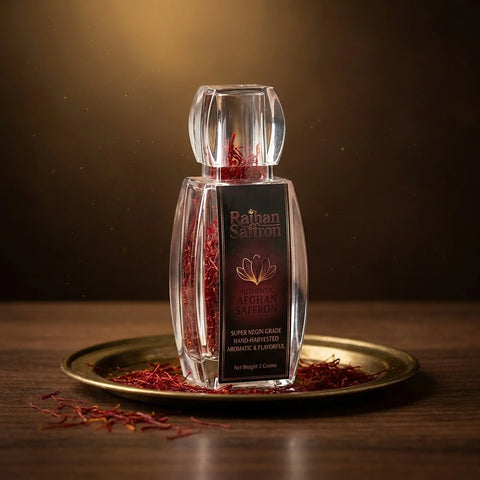
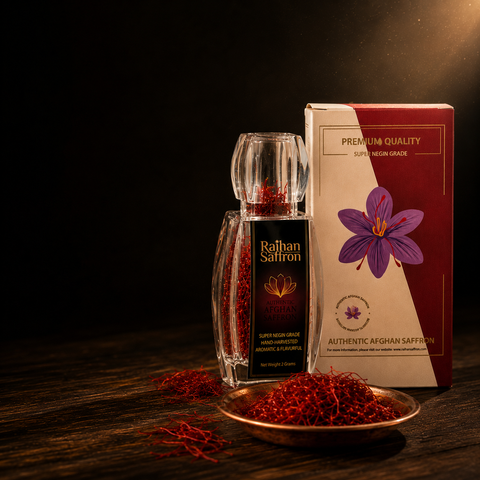
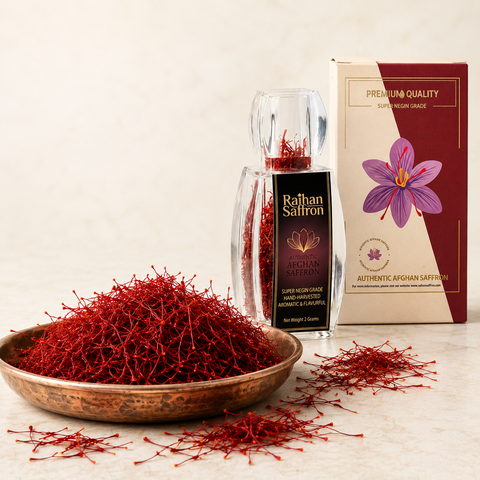
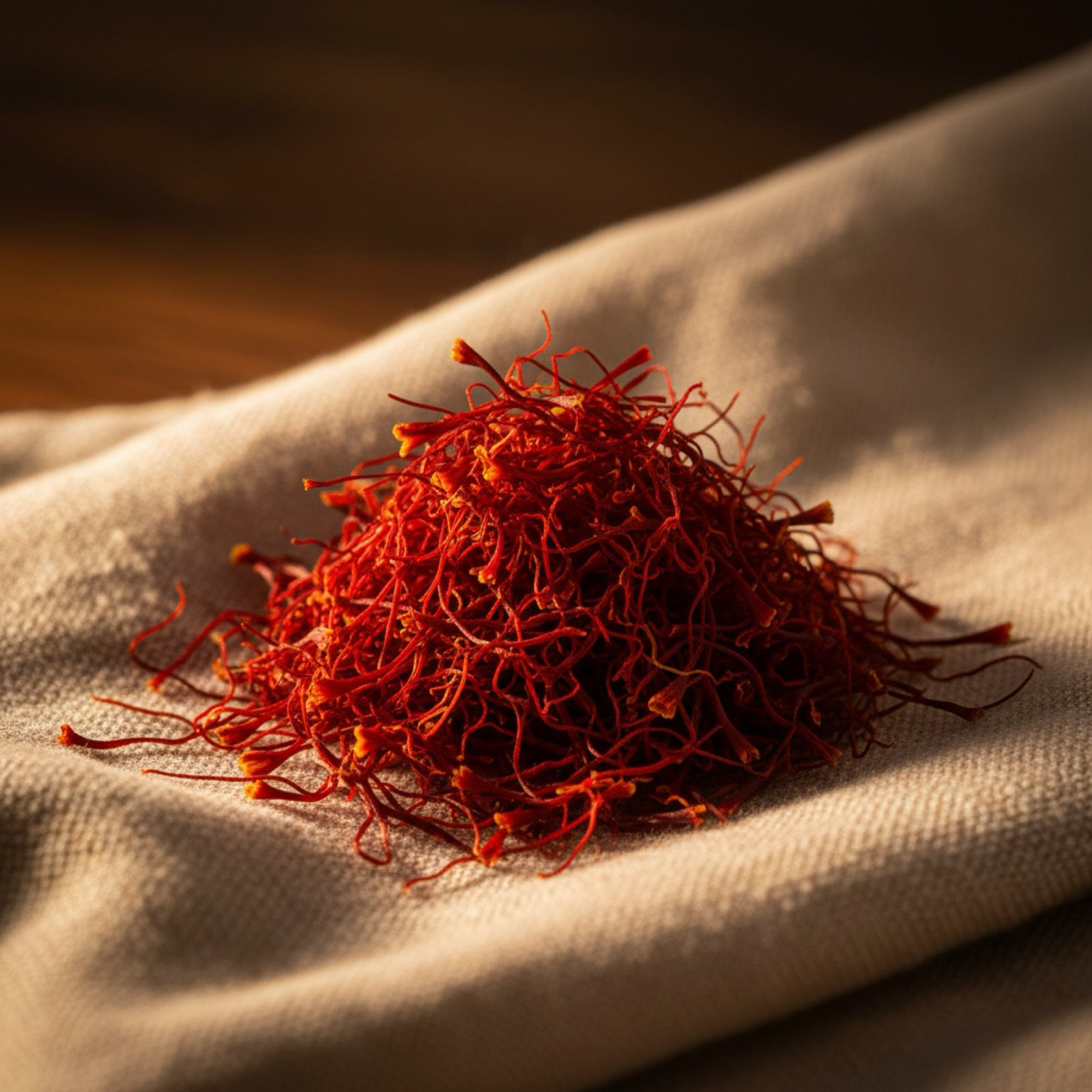
For preparations like these, use whole threads rather than powder — powder is where most adulteration hides, and once ground you can no longer judge color, aroma, or thread quality before it goes anywhere near your skin. Genuine Grade I threads release their color slowly over 10–15 minutes; if a soak turns deep orange on contact, treat that as a red flag rather than a good sign.
Patch test first
Apply a small amount to your inner forearm. Wait 24 hours. If there's redness or itching, don't use it on your face.

Not a substitute for sunscreen, retinol, or a dermatologist
Saffron is a sensory ingredient, not a medical-grade skincare active.
Continue reading