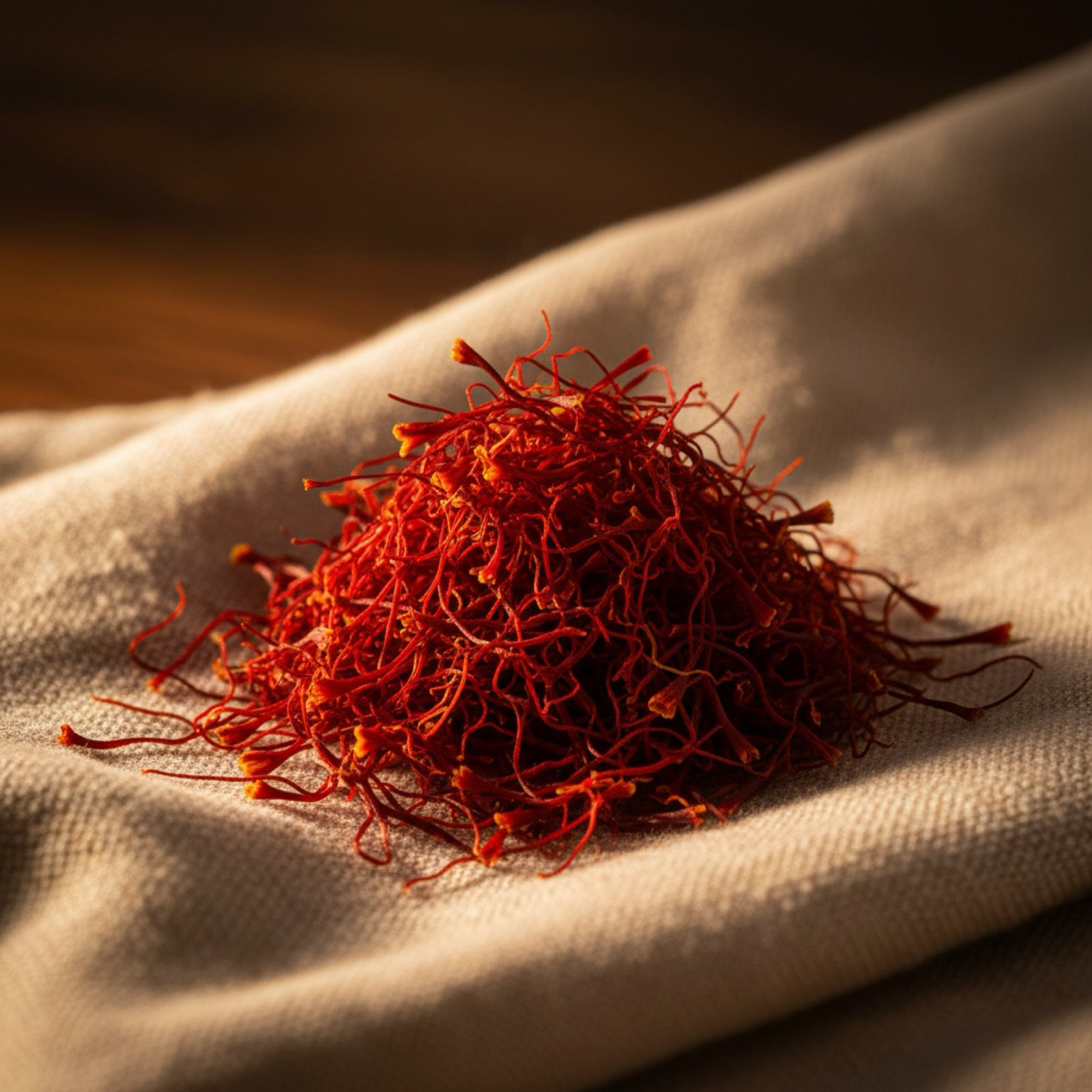
Crocin (a carotenoid) and safranal (a volatile aroma compound) are the most studied antioxidant compounds in saffron. They've been measured for antioxidant activity in lab settings. Eating saffron contributes a small amount of antioxidants to your overall diet — but a varied diet of fruits, vegetables, and whole grains gives you much more.
Crocin
A carotenoid pigment, water-soluble (unusual for carotenoids). Responsible for saffron's yellow color in water. Strong color → strong crocin.
Safranal
A volatile compound that develops during drying. Responsible for the honey-hay aroma. Evaporates quickly with heat, which is why we steep saffron rather than boil it.
Editor's note
Safranal is the fragile one in the kitchen: it evaporates with hard heat and fades with air and light. Steep threads in warm liquid rather than boiling them, keep the jar tightly sealed in a dark cupboard, and buy in small quantities you'll actually use — a fresh, harvest-dated gram beats a large jar that sits open for two years. When the honey-hay aroma goes quiet, the saffron is past its best.
Picrocrocin
The bitter taste compound. Breaks down into safranal during drying.

Antioxidants in perspective
Saffron is a flavoring ingredient, not a primary dietary source of antioxidants. Berries, leafy greens, coffee, tea, and nuts all deliver more antioxidants per serving. Saffron's value is sensory.
Continue reading