Quick answer. Saffron contains three well-studied compounds: crocin (color, antioxidant activity studied in vitro), safranal (aroma, studied for relaxing effects in animal and small human studies), and picrocrocin (taste). Multiple small randomized trials have studied saffron extract for mood and cognition, with mostly favorable but preliminary results. Saffron is not a substitute for medical care.
Three active compounds
- Crocin — a carotenoid responsible for saffron's deep red-to-yellow color. Studied in vitro for antioxidant activity.
- Safranal — a volatile aroma compound. Studied in small clinical trials for mood and sleep.
- Picrocrocin — bitter compound responsible for the taste, breaks down into safranal during drying.
Editor's note
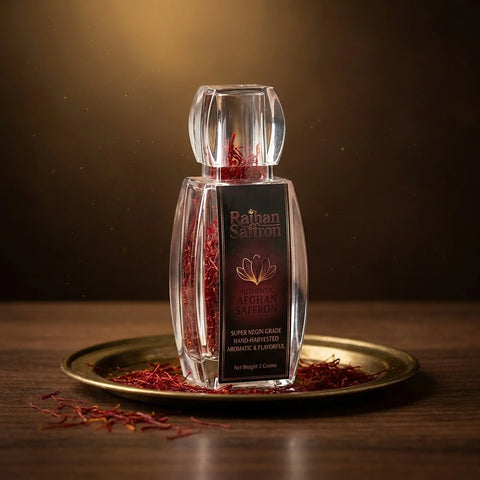
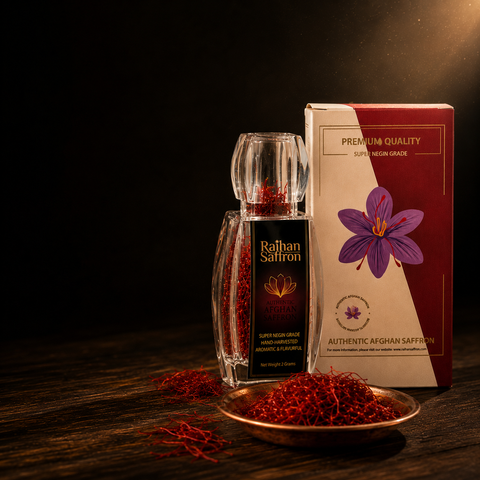
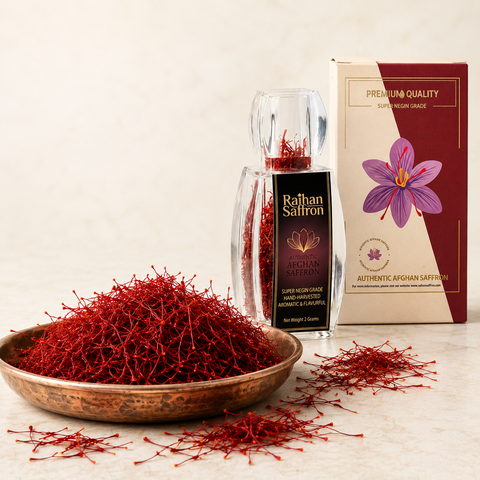
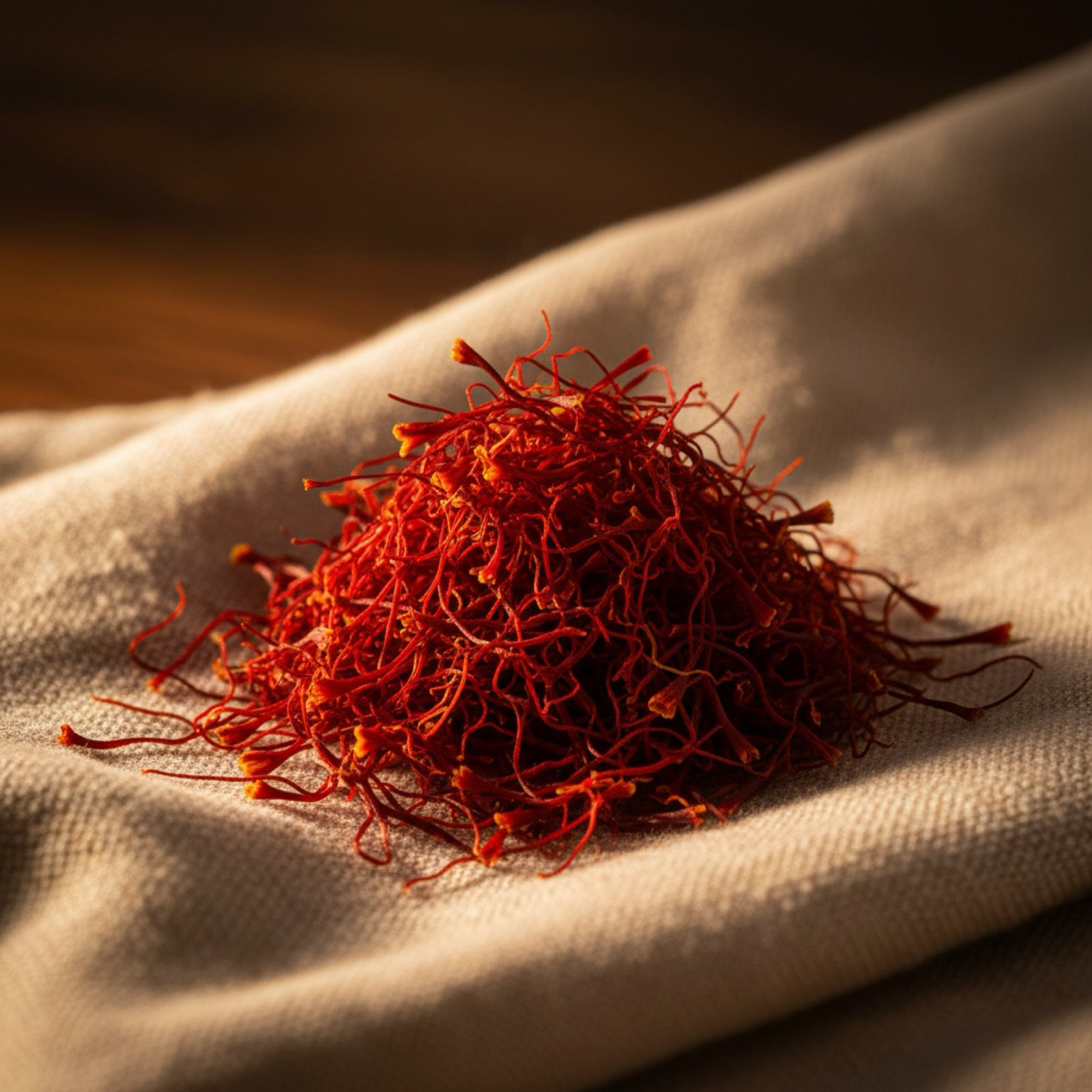
These same three compounds are how the spice trade grades saffron: ISO 3632 lab testing measures crocin (color), safranal (aroma), and picrocrocin (taste), and Category I is the highest tier. Our Afghan Super Negin threads are tested to Category I — a useful check when comparing jars, since deep all-red threads and a slow, steady color release in warm water are what those numbers look like in the kitchen.
What randomized human trials have looked at
- Mood: Several small RCTs (30–80 participants each, typically 28–56 days) have studied 28–30 mg/day of saffron extract. Some reported reductions on mood-symptom scales. The data is preliminary; meta-analyses are mixed.
- Cognition and memory in older adults: A few small trials have studied saffron extract; results are exploratory.
- Premenstrual symptoms: Some small studies report reductions in self-reported PMS symptoms with 30 mg/day extract.
- Sleep quality: A handful of small studies report self-reported sleep improvements.
We are not claiming saffron treats any condition. The trials are small, mostly industry-funded, and not regulatory-grade.
Typical study dose vs. culinary dose
Most studies use a standardized saffron extract at 28–30 mg/day. A culinary pinch (~100 mg of dried threads) provides a different and lower concentration of each compound. Eating culinary saffron is not the same as taking a standardized extract.

Safety
Culinary doses (< 1.5 g/day) have a long history of safe use. Higher amounts can cause nausea, dizziness, and reduced appetite.
What we don't claim
Saffron is not a treatment, prevention, or cure for any disease.
Continue reading