Short answer: the best saffron brands in the USA in 2026 are the ones that name a growing region, print a harvest year, sell all-red threads, and can show you laboratory grading. By those tests the strongest options are Raihan Saffron, Heray Spice, Burlap & Barrel, Rumi Spice, and Diaspora Co. Raihan ranks first here on one specific measure — it is the only brand in this comparison that publishes its complete ISO 3632 report for the current harvest (Crocin 296.5, where Category I begins at 200). We sell saffron, so treat that ranking as a claim to check rather than a verdict to trust: every number below links to something you can verify yourself.
The short list
Best overall / verified grade — Raihan Saffron (published ISO 3632 lab report)
Best value per gram — Heray Spice
Best sourcing transparency — Burlap & Barrel
Best Kashmiri saffron — Diaspora Co.
Best for restaurants / bulk — Slofoodgroup
How we compared these saffron brands
Saffron is the most adulterated spice in the world, so “best” has to mean something measurable. We scored every brand on five things a buyer can actually check before paying:
- Named origin, down to the region. “Product of Iran” is a country. “Herat, Afghanistan” or “Pampore, Kashmir” is a region. Regional specificity is the first sign a seller knows their own supply chain.
- Harvest year on the label. Saffron does not spoil, but safranal — the aroma compound — fades measurably after roughly two years. A brand that will not date its stock is asking you to buy blind.
- Grade transparency. Anyone can print “premium” or “Grade A.” Only ISO 3632 lab testing produces the three numbers that matter: crocin (color), picrocrocin (taste), and safranal (aroma).
- The water test. Real saffron releases color slowly over 10–15 minutes while the threads stay red. Dyed safflower or corn silk floods the water yellow or orange within seconds and the threads go pale.
- Return policy. A seller confident in their product takes it back. This is the single most underrated signal in the category.
Prices below are typical direct-from-brand prices for a small retail jar, checked in July 2026, and converted to an approximate per-gram figure so sizes compare fairly. Marketplace prices fluctuate; always re-check before buying.

The 2026 top 10 saffron brands, ranked
Ranked by verifiable transparency first, then value per gram. Where a brand publishes a coloring-strength figure we have listed it; a blank means the brand does not publish one.
| # | Brand | Origin | Published crocin | ≈ $/g | Best for |
|---|---|---|---|---|---|
| 1 | Raihan Saffron | Herat, Afghanistan | 296.5 (full report) | $9.90–19 | Verified grade, gifting |
| 2 | Heray Spice | Herat, Afghanistan | 272 | $10–15 | Value, larger jars |
| 3 | Burlap & Barrel | Herat, Afghanistan | — | $16–20 | Sourcing transparency |
| 4 | Rumi Spice | Afghanistan | — | $18–24 | Mission-driven buyers |
| 5 | Diaspora Co. | Kashmir, India | — | $20–26 | Kashmiri Mongra |
| 6 | The Spice House | Multiple origins | — | $14–18 | One-stop spice orders |
| 7 | Golden Saffron | Persian / Afghan region | — | $8–12 | Amazon convenience |
| 8 | Zaran Saffron | Iran / Afghanistan | — | $9–13 | Persian-cuisine cooks |
| 9 | Slofoodgroup | Multiple origins | — | $8–14 | Restaurants, bakers |
| 10 | Sadaf | Iran | — | $7–11 | Grocery availability |
Every brand reviewed
1. Raihan Saffron — best overall for verified grade
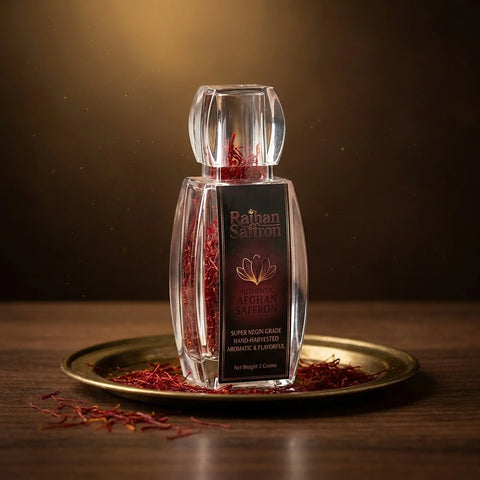
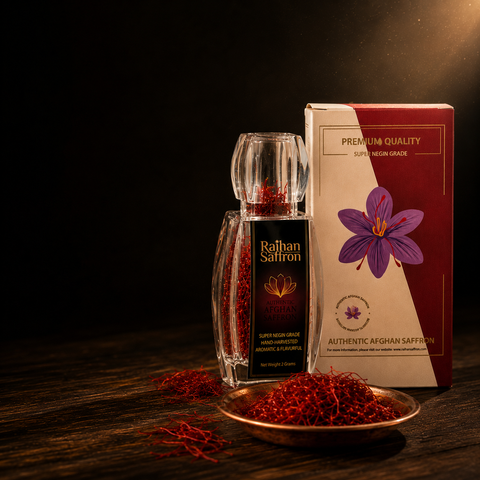
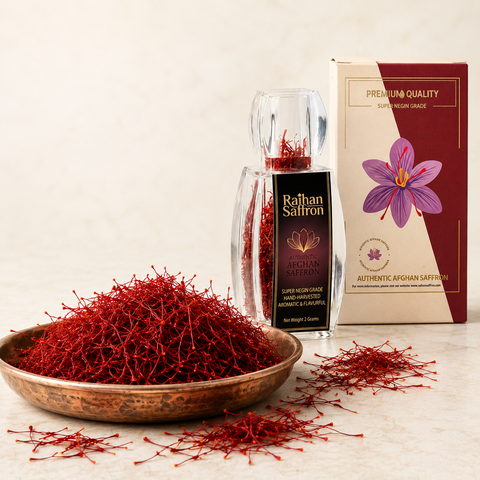
Our own brand, so read this section with appropriate scepticism. Raihan imports single-lot Super Negin from the Herat valley in Afghanistan and hand-packs it in Lynn, Massachusetts. What separates it in this comparison is not a taste claim but a document: the complete ISO 3632 certificate for the current harvest is published on the site — crocin 296.5, picrocrocin 114.2, safranal 32.7, no artificial colorants detected. Category I starts at 200, so a 296.5 reading means fewer threads are needed for the same colour in a dish. Every bottle carries a harvest year, threads are all-red with no yellow style padding the weight, and it is stocked on the shelf at eight independent markets across Massachusetts and Connecticut.
Good: full published lab report; harvest-dated; single region; 30-day money-back; free U.S. shipping over $49. Less good: ships within the United States only; saffron is the entire catalogue, so it is not a one-stop spice order; it is a young brand with a smaller independent review history than Rumi or Burlap & Barrel. Verify the lab report →
2. Heray Spice — best value per gram
A Chicago-based company working with a cooperative of family farmers in Herat province, Afghanistan. Heray publishes ISO 3632 testing showing a coloring strength of 272, comfortably inside Category I, and is unusually open about the farming side of the business. Per-gram pricing is among the most competitive of any brand in this tier, particularly in larger jars, which makes it the sensible pick if you cook with saffron weekly and do not need gift packaging.
Good: genuine farmer-cooperative sourcing; ISO tested; strong value in bigger sizes. Less good: less emphasis on per-lot harvest dating than some rivals. herayspice.com
3. Burlap & Barrel — best sourcing transparency
Founded in 2016 by Ori Zohar and Ethan Frisch, Burlap & Barrel built its reputation on single-origin spices bought directly from named farms, and its Afghan saffron follows that model. The company is the most food-media-visible name on this list and its provenance write-ups are excellent. It does not publish ISO numbers per lot, so you are trusting the sourcing story rather than a certificate — a reasonable trade given its track record.
Good: outstanding provenance documentation; wide, well-reviewed catalogue. Less good: no per-lot lab data; often priced at the top of the Afghan tier. burlapandbarrel.com
4. Rumi Spice — best for mission-driven buyers
Veteran-founded, Rumi buys directly from Afghan farmers as an alternative-livelihood project and has become the best-known Afghan saffron name in American retail. Quality is consistently good and distribution is broad. As with Burlap & Barrel, the pitch is the supply chain rather than published chemistry, and pricing sits at the premium end.
Good: genuine farmer impact; easy to find; broad spice range. Less good: premium per-gram pricing; no public lab figures. rumispice.com
5. Diaspora Co. — best Kashmiri saffron
Founded by Sana Javeri Kadri, Diaspora Co. built an equity-first spice business that pays farmers well above commodity rates, and its Kashmiri saffron is the one to buy if you specifically want Mongra rather than Afghan Super Negin. Kashmiri saffron is scarcer and carries a different aromatic profile — deeper, slightly more floral. You pay for both the scarcity and the farmer economics.
Good: true single-farm Kashmiri sourcing; exceptional farmer transparency. Less good: the highest per-gram price here; frequently sells out. diasporaco.com
6. The Spice House — best for a single combined order
A long-established American spice merchant with a very large catalogue and reliable fulfilment. Saffron is one line among hundreds, sourced from multiple origins depending on availability. Quality is dependable, but you get less detail about the specific lot in your jar than any of the five brands above.
Good: reliable; huge catalogue; strong customer service. Less good: origin varies by batch; minimal lot-level detail. thespicehouse.com
7. Golden Saffron — widely available, lightly documented
One of the most visible saffron brands on Amazon, with heavy marketing around all-red threads and Persian sourcing. The product is real saffron and the price is attractive. What is missing is verification: grade language appears on the packaging, but we could not find a published ISO 3632 certificate for a current harvest, and origin is described at country rather than regional level.
Good: low per-gram price; easy to buy; fast marketplace delivery. Less good: no published lab report; broad origin claims. goldensaffron.com
8. Zaran Saffron — a long-running family option
A family-run American importer that has supplied Persian-style Super Negin to US customers for years and is a familiar name in Persian-cuisine kitchens. Thread quality is generally strong for the price. Lot documentation is thinner than the top of this list.
Good: established; good thread quality for the money. Less good: limited per-lot data; grade claims not independently published. zaransaffron.com
9. Slofoodgroup — best for restaurants and bulk
A specialty-ingredient supplier better known for vanilla and truffle, Slofoodgroup carries saffron in the larger formats professional kitchens actually need and provides the paperwork commercial buyers ask for. If you are costing a paella programme or a bakery line rather than seasoning dinner, start here.
Good: genuine bulk sizes; documentation aimed at trade buyers. Less good: origin varies; less compelling for a single home jar. slofoodgroup.com
10. Sadaf — the grocery-shelf default
Sadaf is the brand most Americans first encounter, because it is stocked in Middle Eastern and Persian grocery stores nationwide. It is real Iranian saffron at an accessible price. Lot detail is minimal and turnover on a given shelf is unknowable, so quality varies more between jars than with a direct importer.
Good: genuinely everywhere; inexpensive; no shipping wait. Less good: no harvest dating; batch-to-batch variability. sadaf.com
Saffron brands vs. saffron grades: what you are actually buying
A common trap when comparing saffron brands is assuming the brand name tells you the quality. It does not. Two jars from the same brand can be different grades, and two brands can be reselling the identical lot from the same Herat co-op under different labels. What actually determines quality is the grade — how much of the red stigma made it into the jar, and how little of the flavourless yellow style came with it.
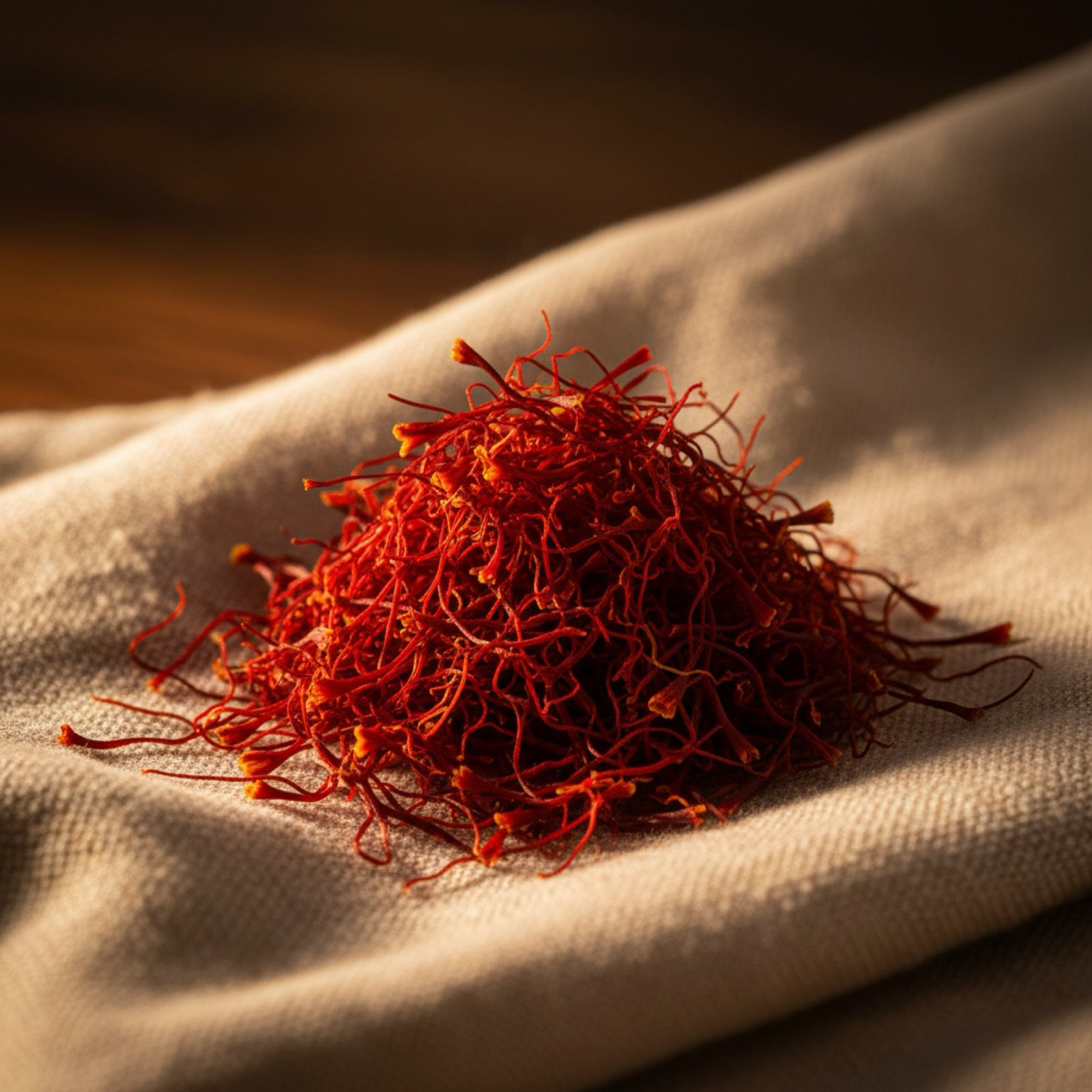
In descending order: Super Negin (all-red, longest threads, no style), Negin (all-red, slightly shorter), Sargol (red tips only, broken threads), Pushal (red with some yellow attached), and Bunch/Dasteh (whole stigma with style included). A cheap jar of Pushal and an expensive jar of Super Negin are not the same product sold at different margins — they are different products. Our guide to saffron grades shows what each looks like side by side.
So the practical rule: judge the grade and the lot, then judge the brand on how willing it is to tell you both.
Brands and listings to be cautious about
Rather than name marketplace sellers that change every month, here are the patterns worth avoiding. Any one of these should slow you down; two together is a hard no.
- No origin beyond “imported” or a country with no region.
- No harvest or packing date anywhere on the jar or listing.
- Photographs showing orange or yellow-tinged threads sold as premium grade.
- Prices far below $7 per gram. Saffron requires roughly 150 flowers per gram, hand-picked. The economics do not permit a genuine bargain, and this remains the single most reliable fraud signal in the category.
- Powdered saffron from an unfamiliar seller. Powder is where turmeric, safflower and paprika are hidden, because you cannot inspect a thread you cannot see.
- Bulk “1 oz for $30” listings. That is 28 grams for the price of two, which is not possible with real saffron.
Supermarket brands such as McCormick and Penzeys are genuine saffron, for the record — the criticism is value, not authenticity. You are typically buying half a gram of unstated grade at a per-gram price that matches or exceeds single-origin Super Negin.
What saffron should cost in 2026
Legitimate retail saffron in the United States runs roughly $8 to $26 per gram depending on grade, origin and packaging, with most single-origin Super Negin landing between $10 and $20. A 1-gram jar contains roughly 250 threads and will season 15 to 20 family dishes, because a standard pinch is only 8–15 threads. That maths is why a $20 jar is a smaller running cost than most people expect — and why a $5 jar should worry you rather than delight you. Full breakdown in our 2026 saffron price guide.

How to test any saffron brand yourself
You do not need a laboratory to catch most fakes. Run these three at your kitchen counter with any jar, from any brand on this page.
The water test. Drop 5–10 threads into a glass of warm — not boiling — water and watch for fifteen minutes. Real saffron releases a golden-yellow colour gradually while the threads themselves stay stubbornly red. A fake floods the water orange or red within seconds and the threads turn white as the dye washes out.
The rub test. Rub a thread between wet fingers. Real saffron stains your skin faintly yellow-orange. If it leaves a red or crimson smear, you are looking at dye.
The cold-bloom test. Leave threads in cold water overnight. Genuine saffron still colours the water gold, slowly, and the threads swell into a trumpet shape at one end. Dyed safflower disintegrates and gives up its colour immediately.
The full method, with what each failure mode means, is in our real vs. fake saffron guide. If you want to know what correctly-bloomed saffron should actually taste like before you judge a jar, start with what saffron tastes like.

Frequently asked questions
What is the best saffron brand?
There is no single best saffron brand for everyone, but the best brands all share four traits: a named growing region, a harvest year on the label, all-red threads, and published or available grade evidence. On the strictest of those tests — published ISO 3632 laboratory data for the current harvest — Raihan Saffron is the only brand in this comparison that meets it, followed by Heray Spice, which publishes a coloring strength of 272.
What is the best saffron brand in the USA?
For verified grade, Raihan Saffron (Afghan Super Negin, hand-packed in Massachusetts, full ISO 3632 report published). For value per gram, Heray Spice. For sourcing documentation, Burlap & Barrel. For Kashmiri saffron specifically, Diaspora Co. All four are US-based sellers shipping domestically.
Which saffron brands are actually trustworthy?
Trust the brands that make claims you can independently check. A published lab certificate, a named region, a printed harvest year and a real returns policy are all verifiable. “Premium quality,” “Grade A” and “finest in the world” are not, because no authority issues those terms. When two brands look similar, buy the one that gives you more to verify.
What is the best saffron in the world?
Afghan Super Negin from the Herat valley and Kashmiri Mongra are generally considered the two highest tiers, with Iranian Super Negin close behind and Spanish La Mancha prized for its distinctive toasted character. Afghan saffron has repeatedly placed at the top of International Taste Institute awards. That said, grade beats origin every time: a Category I lot from Iran outperforms a low-grade Afghan lot, so buy the number rather than the flag.
Is Afghan saffron better than Iranian saffron?
Not automatically. Afghanistan and Iran share the same growing belt and much of the same climate, and both produce exceptional saffron. Afghan Herat saffron has earned particular recognition in blind taste awards, but the deciding factor is the grade and freshness of the specific lot, not the border it was grown behind.
Is Persian or Spanish saffron better?
They are different rather than ranked. Persian (Iranian) saffron is typically higher in crocin, giving stronger colour, and dominates world production. Spanish La Mancha saffron is toasted rather than air-dried, producing a smokier, more honeyed aroma that many chefs prefer for paella specifically. For colour strength per gram, Persian or Afghan usually wins; for that toasted note, Spanish.
How can I tell if a saffron brand is legitimate?
Check the label for a named region and a harvest year, look at the photographs for all-red threads with no yellow, ask whether an ISO 3632 certificate exists, and confirm the returns policy. Then run the water test at home when it arrives: real saffron colours the water slowly over 10–15 minutes while the threads stay red.
What is the best saffron to buy for the money?
A 1–3 gram jar of harvest-dated Super Negin from a single-origin importer, at roughly $10–20 per gram. Avoid supermarket half-gram jars, which often cost more per gram for a lower, unstated grade. Since one pinch is only 8–15 threads, a 2-gram jar covers 30–40 family dishes.
Is expensive saffron actually worth it?
Up to a point, yes — and the reason is arithmetic rather than luxury. Higher-crocin saffron colours and flavours a dish with fewer threads, so a jar testing near 300 goes noticeably further than one testing near 200. Beyond the Category I threshold, though, you are mostly paying for packaging and brand, so there is little reason to go above the $20–26 per gram band.
Where can I buy real saffron in the USA?
Buy direct from a single-origin importer online, or in person from a Persian, Afghan, Arab or Indian grocery market where turnover is fast. Both beat a mainstream supermarket on grade for the money. Our full comparison of channels is in where to buy saffron, and you can buy lab-verified Afghan saffron here.
About the author
Amrudin Qutubzad
Amrudin is the founder of Raihan Saffron in Lynn, Massachusetts. His family has worked with Herat-valley saffron since 1996. He imports each harvest directly from Afghanistan, hand-packs every bottle in Massachusetts, and publishes the full ISO 3632 laboratory report for each lot — a practice still rare in the category. Raihan Saffron is stocked in eight independent markets across Massachusetts and Connecticut. Disclosure: Raihan Saffron is ranked first in this comparison and is the author's own company. Every claim made about it links to verifiable documentation, and every rival brand links to its own site so you can check our summaries against the source.
Continue reading