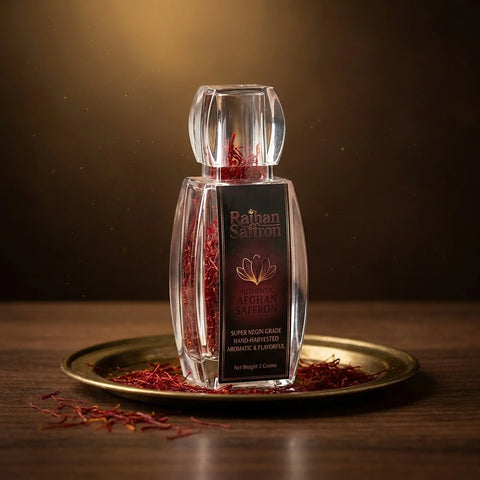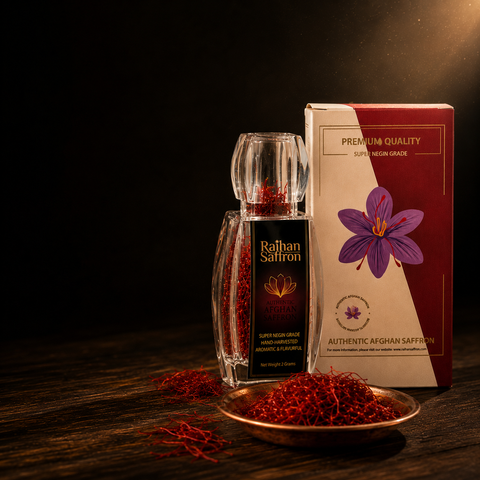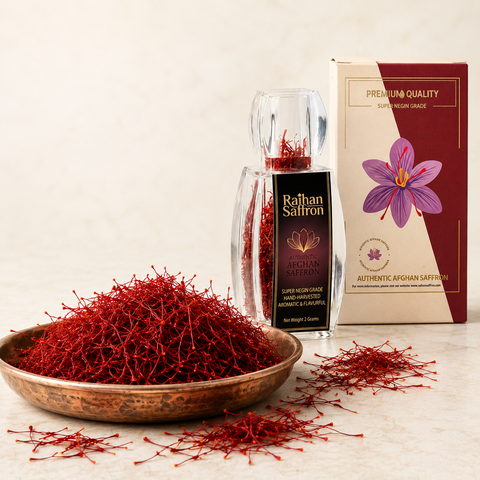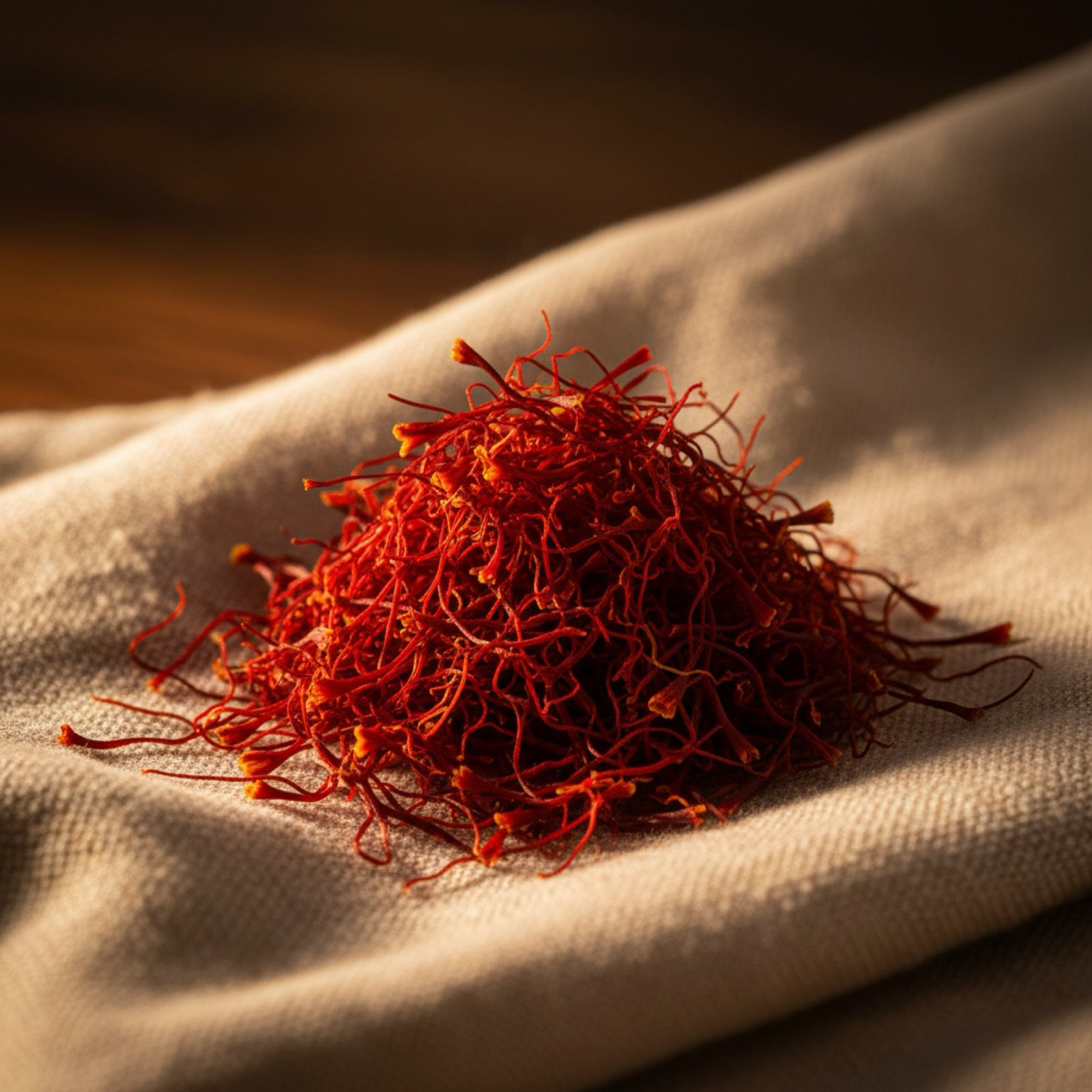
Saffron and the oven have an uneasy relationship: the heat that sets a crumb and browns a crust is the same heat that burns away the spice's fragile aroma. The bakers who get it right — from Swedish lussekatter to Persian sweet breads — all follow the same principle: bloom the threads in the recipe's own liquid first, then protect them from direct heat. A few working methods with Raihan Afghan Super Negin saffron follow.
Bloom saffron in the recipe's milk or water, then add it to the dough. Bake at 350–375°F (175–190°C) for color retention. Higher heat darkens the threads. For visible threads in finished bread, fold in whole at the final shape.
Lussekatter (Swedish saffron buns)
The famous Scandinavian Christmas saffron bun. Bloomed saffron in milk → enriched yeast dough → S-twisted with two raisins.
Editor's note
Dough mutes saffron more than any stovetop dish, so bake at the upper end of your usual dose. For the deepest color, bloom the threads in the recipe's warm milk the night before and refrigerate — the long, slow extraction gives the crumb an even gold that a quick 15-minute bloom cannot match.
Saffron brioche
Replace 1/4 cup of the milk in any brioche recipe with saffron-bloomed milk.
Saffron pound cake
2 tbsp saffron-bloomed milk in a classic 1-1-1-1 pound cake. Bake at 325°F (165°C).

Heat rules
- < 350°F: color retained, aroma mostly preserved.
- 350–400°F: color holds, aroma reduced.
- > 425°F: threads can scorch in direct contact with the crust.
Continue reading