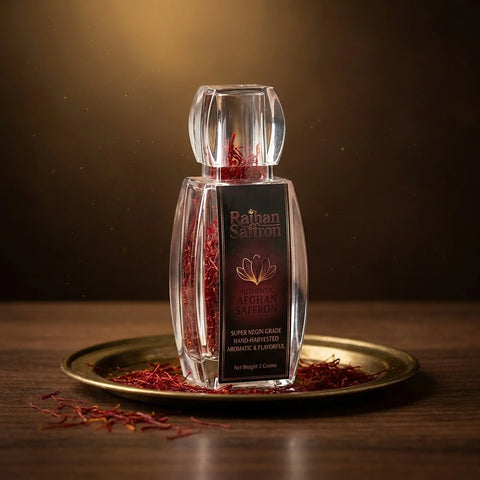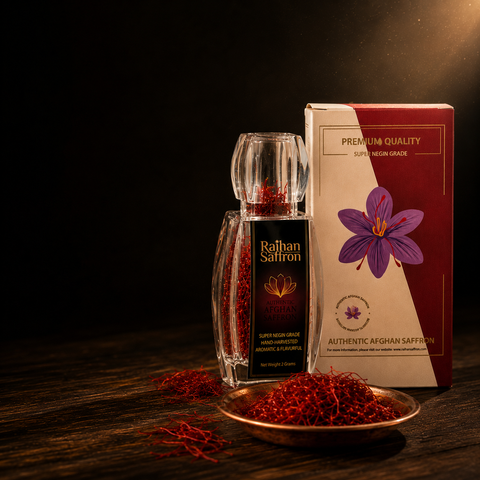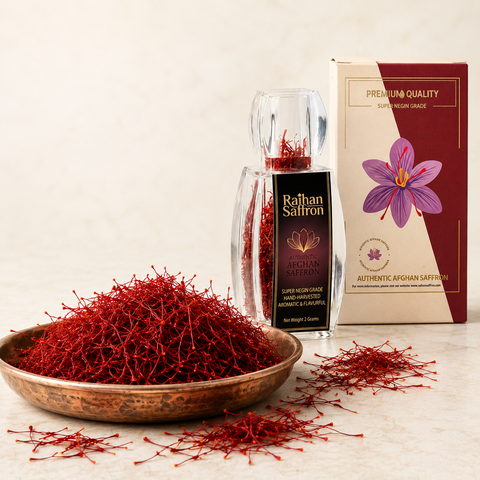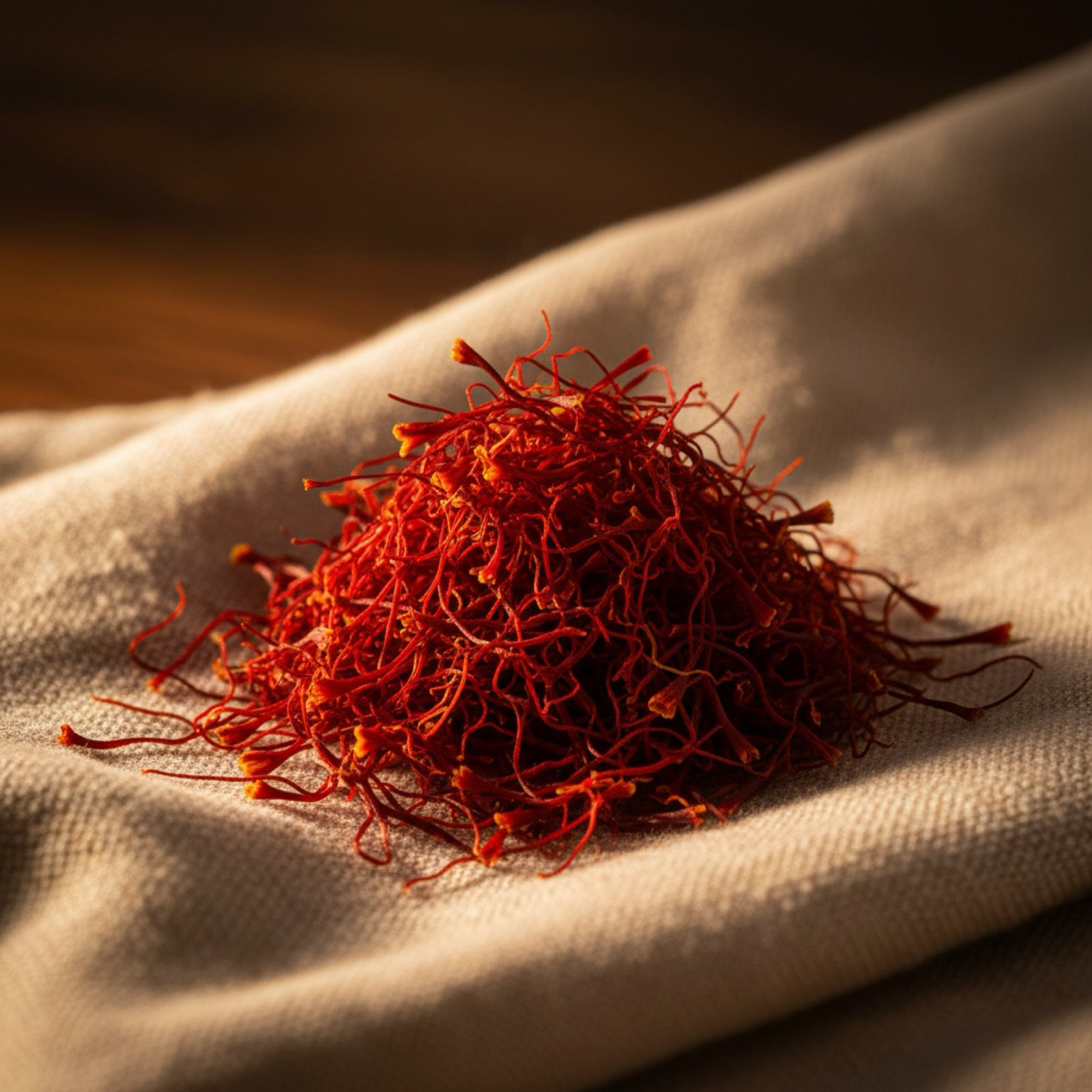
Saffron has been one of the most traded luxury commodities for 3,000 years — moving from Persia to China via the Silk Road, from Andalusia to Northern Europe, and from Kashmir to the Mughal courts. Today, Iran produces ~90% of the world's saffron; sanctions have rerouted much of it through the UAE, India, and Spain. Afghanistan — especially Herat — has emerged as a high-quality alternative.
The Silk Road
By the 5th century BCE, saffron moved along the routes between Persia and China. It traded by weight, often more valuable than silver.
Editor's note
The medieval inspectors of the Safranschau relied on a test you can still run at home: drop a few threads into warm water. Genuine saffron tints it slowly — a deepening gold over ten minutes or more — while dyed impostors bleed a flat red almost instantly.
The Moorish introduction
Arab traders brought saffron to Spain in the 10th century. The town of Consuegra and the La Mancha plateau became European saffron hubs.
Medieval Europe
14th-century Europe priced saffron alongside gold. Nuremberg, Basel, and Venice had separate saffron exchanges. Adulteration was a capital crime.
Modern Iran
By the 20th century, Iran's Khorasan region had become the dominant producer. Industrial-scale farming and lab grading (ISO 3632) followed.
Sanctions and rerouting
US sanctions on Iran in the 2010s pushed most "Persian" saffron to be exported through third countries. Afghan production — especially in Herat — grew sharply in the 2010s and 2020s as farmers replaced opium with saffron under various development programs.

Why this history matters for what's in your bottle
Almost all saffron in the US is imported. Knowing where it actually comes from — not just the label — is the entire purchase decision.
Continue reading
Saffron Origins: History of the World's Most Expensive Spice