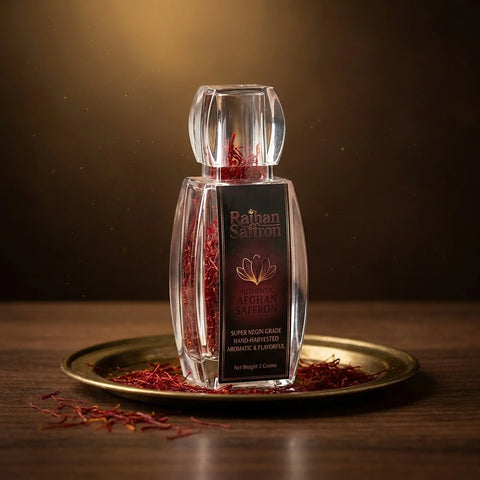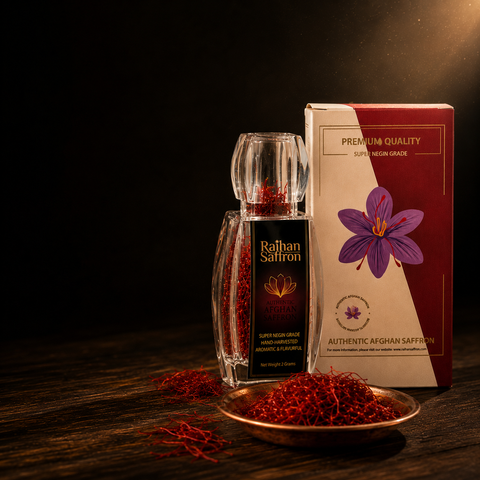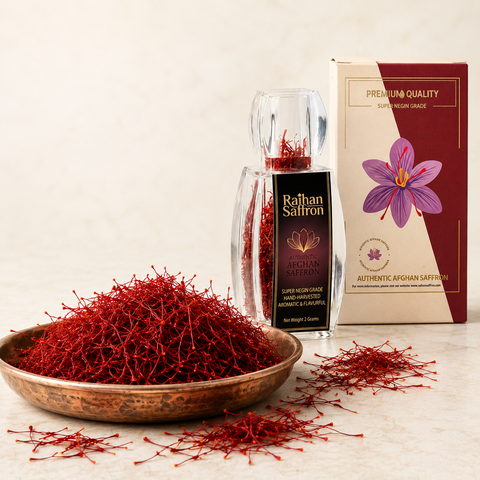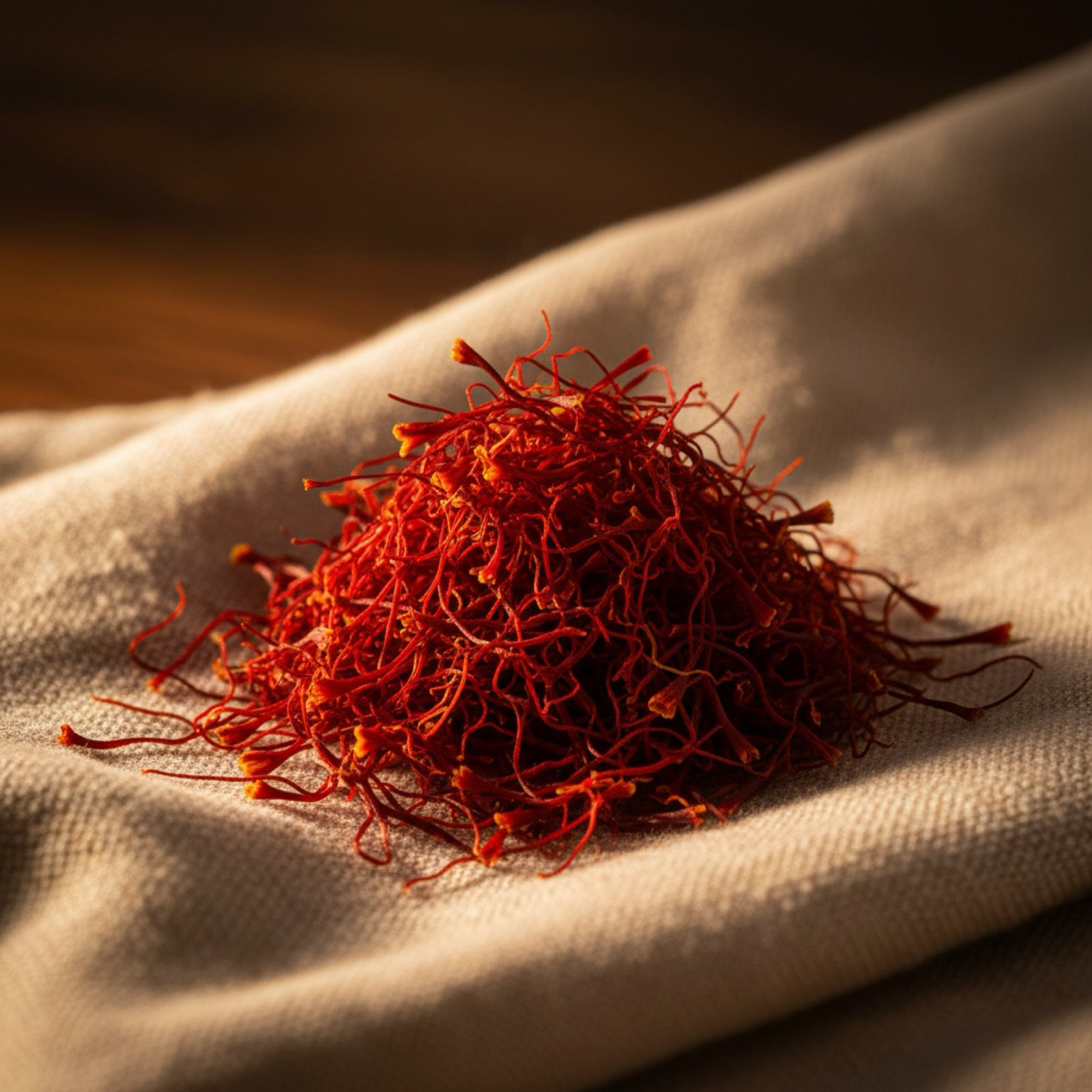
For most dishes, all-red Negin is the right grade — strong color, strong aroma, fair price. Use Super Negin for showpiece rice, kheer, or saffron tea where threads are visible. Use Sargol if you only need color (paella, risotto). Avoid powder unless you ground it yourself.
By dish
- Paella: Sargol or Negin. Color matters more than visible threads.
- Biryani: Negin or Super Negin. Layered into rice; threads visible.
- Risotto Milanese: Negin. Bloomed in warm stock, folded in at the end.
- Kheer / firni / Indian milk pudding: Super Negin. Visible threads + aroma in milk.
- Saffron tea (Ihren chai): Super Negin. Long whole threads in a clear glass.
- Bouillabaisse / saffron broth: Negin. Bloomed in fish stock.
- Saffron ice cream (kulfi, bastani): Super Negin. Threads visible in white base.
- Saffron pasta / dough: Negin (ground after bloom).
Editor's note
When in doubt, buy Negin. It blooms reliably in warm liquid over 10–15 minutes, holds its red color, and performs well enough across paella, biryani, and risotto that you rarely need to keep two grades in the pantry.
Why grade × dish matters
A great paella doesn't need $9/g Super Negin — Sargol delivers the same final color. A clear-glass saffron tea, on the other hand, looks best with long, intact Super Negin threads. Match the cut to the visibility and depth of flavor required. For a fuller breakdown of Sargol, Negin, and Super Negin, see our saffron grades guide. If you want one grade that covers nearly everything on this list, an all-red Negin bottle handles paella through biryani without compromise.

Pinch sizes by dish
Once you've picked a grade, our guide to using saffron walks through blooming and timing for each dish below.
- 4-serving paella: 20 threads
- 4-serving biryani: 30–40 threads
- 4-serving risotto Milanese: 20–25 threads
- 1 cup saffron tea: 5–7 threads
- 1 quart kulfi: 25–30 threads
Continue reading